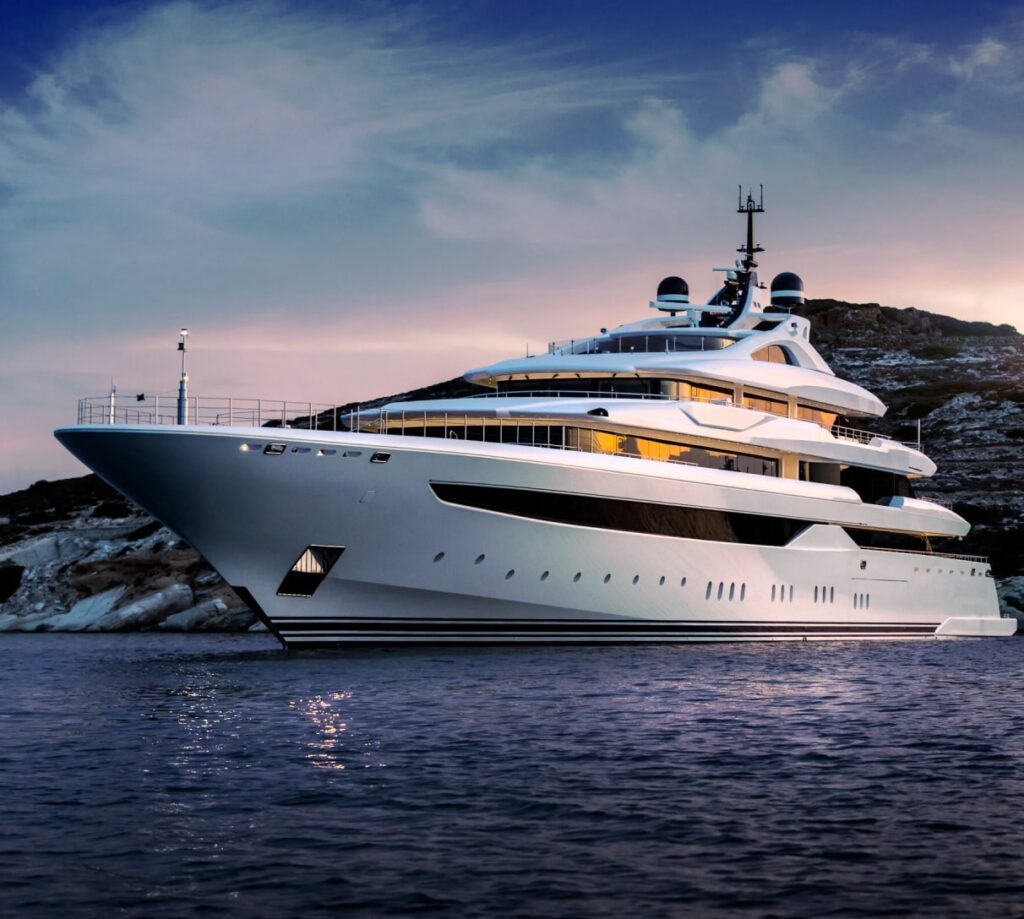

Singular by Name. Singular by Nature.

SINGULAR YACHTING GROUP LTD

We are an international team of brokers, strategists, and coordinators with a proven background in premium travel, yachting, and private aviation. What unites us is not only expertise, but also the way we work: precise, discreet, and always client-oriented.

Our partners include MYBA and TYBA brokers, family offices, and private yacht owners across Europe and the Middle East. Thanks to this network, our clients gain access to opportunities that go far beyond the open market.

For us, a charter is never just a transaction. We don’t simply arrange itineraries — we build trust and long-term relationships. Every journey is designed as a bespoke experience, with each detail tailored to reflect the client’s rhythm, preferences, and vision.

Each itinerary is a piece of craftsmanship — a balance of destinations, moments, and flawless execution. That is why our clients return: not for repetition, but for a new story written exclusively for them, every time.

Legal Office

46 St. Leonards Road, Northampton, NN4 8DP, England

Company Number

15967217

Send us a request

info@singularyachting.com

Or just call us

+44 7879 022 894

Simple benefits of cooperation with us

Top Level of Service

Life is about events that you will remember.

Convenient Payment System

Any convenient type of payment

Support Anywhere in the World

Just contact us and we will help

24/7 Customer Service

Always in touch Your personal manager

F. A. Q.

1 day – maximum opportunities! This is the format chosen by 80% of guests

✔️ The minimum slot is not a day, but a day:

Choose a comfortable interval:

– 10:00-17:00 – afternoon itinerary of bays and lagoons,

   Swimming in azure water, stops at picturesque anchorages, lunch on board – full

–  17:30-21:30 – soft evening breeze, golden light on the water and a magical sunset that takes your breath away

✔️ Want more? Combine the intervals – and get a whole day’s high!

✔️ Everything is included: comfort, care, music, drinks, chef’s lunch and an atmosphere you won’t forget!

The services included depend on the length of the rental and the package selected. Below is an explanation of each format:

 Daily charter

Duration: 4-8 hours

     Enabled by default:

  • Yacht charter with crew
  • Fuel per route (up to 4 hours per day)
  • Visiting picturesque bays and lagoons
  • Bathing stops
  • Ice and soft drinks (water, juices, soft drinks)

    Additionally, optional:

  • Lunch on board (most often a fish or meat set)
  • Possibility to bring or order alcohol
  • Yacht decoration for an event (birthday, proposal, etc.)

Weekly charter

Duration: 7 days or more
 Format with APA (Advance Provisioning Allowance):

You pay a deposit in advance (usually 25-30% of the rental price), from which is paid:

  • Fuel at actual consumption
  • Food and beverages, including alcohol
  • Water toys and activities on board (saps, scooters, seabob, etc.)
  • Port dues, parking fees, taxes
  • Individual requests (menus, flowers, transfers, etc.)

At the end of the charter week, a full report and refund of the balance, if any.

APA-free format (fixed packet):

  • Yacht and crew charter
  • Fuel for standard route (up to 4 hours per day of travel)
  • Basic yacht supply
  • Standard bays and routes

Meals and other expenses can be agreed upon separately prior to the start of the rental.

In brief:

 A Daily Charter is the emotion of the day: swimming, views, drinks, light lunch.
 A week charter is a complete vacation with flexibility and comfort, where everything works to your desires.

APA (Advance Provisioning Allowance) is an advance payment made by the client on top of the yacht’s charter price for a week-long (or longer) charter.

To put it simply:

This is the deposit from which all running costs on board are paid, such as:

  • Fuel (including crossings, generators, tenders and water toys)
  • Food and beverages (including alcohol)
  • Harbor dues, parking in marinas
  • Processing of permits and visas (if required)
  • Laundry, transfers, delivery of anything on request
  • Any individual requests – from lobsters to a DJ on board

How much does it cost?

APA is usually 25-30% of the yacht’s charter price.

How it works:

  1. You deposit the APA along with the final payment.
  2. During the charter, the captain keeps a record of all expenses.
  3. At the end – you get a financial report.
  4. If there is a balance, it is returned to you. If the charges exceed the APA amount, you just pay the difference.


Why it’s needed:

The APA system allows you to make your vacation as personalized as possible – you choose what to eat, where to stay, what services to book, and everything is transparent and under control.


When chartering a yacht, there may be additional costs that are not always obvious at first glance. Below is a list of such potential costs based on information from various sources:

1. Fuel

-Fuel consumption depends on the route, speed and use of auxiliary vessels (tenders, jet skis) -Even when moored in the marina, generators consume fuel to provide electricity

2. Port and mooring charges

-Parking fees in marinas can vary significantly depending on location and season -Particularly high fees can be during major events such as the Monaco Grand Prix or the Cannes Film Festival

3. Food and beverages

-Food and beverage costs depend on guest preferences -Requests for premium products such as deli meats or high-end wines increase overall costs

4. Special requests

-Organization of on-board activities, rental of additional equipment or staff services (e.g. masseur) are charged separately

5. Communication and Internet

-Use of satellite communications or high-speed internet may incur additional costs

6. Insurance

-Some charter companies offer additional insurance options such as trip cancellation insurance or health insurance

7. Taxes and fees

-Some countries may charge VAT or other local taxes not included in the base rental price

8. Tipping the crew

-It is recommended to leave a tip for the crew of 10-20% of the rental price, depending on the level of service and region

9. Transfers and logistics

-Transfers to and from the yacht’s embarkation point and luggage delivery may incur additional costs

10. Security deposit

-Some charter companies require a refundable deposit in case of damage or loss

Yes, in addition to the already discussed expenses when chartering a yacht, there are additional, less obvious costs that can have a significant impact on your overall budget. Here is an expanded list of possible additional costs:

.

Additional costs when chartering a yacht

1. Yacht Relocation Fee (Relocation Fee)

-If you wish to start or end your charter in a port other than the yacht’s standard home port, additional ferrying charges may apply.

2. Cleaning and laundry fees

-Some charter companies charge an additional fee for the final cleaning of the yacht at the end of the charter -There may also be a charge for washing guests’ personal belongings during the charter

3. Charges for the use of certain equipment

-Although many yachts are equipped with a variety of water toys and equipment, the use of some of these (e.g. jet skis, diving equipment) may require additional fees or licenses.

4. Charges for changes in route or schedule

-If you decide to change a pre-agreed itinerary or schedule during your charter, this may incur additional costs, especially if additional fuel or new port charges are required

5. Fee for special events on board

-Organizing events such as parties, weddings or corporate meetings may require additional preparation and resources, resulting in additional costs

6. Charges for delivery of provisions or goods

-If additional food, beverages or other items need to be brought on board during the charter, this may incur additional costs

7. Fees for the use of communication and internet

-While basic Wi-Fi access may be included, use of satellite or high-speed internet may incur additional charges

8. Charges for health care services or insurance

-Some charter companies offer additional insurance options, such as medical or trip cancellation insurance, which are charged separately

9. Visa fees and customs charges

-Visa or customs fees may apply when visiting certain countries or territories, which are not included in the rental price

10. Tipping fee for crew

-It is recommended to leave a tip for the crew of 10-20% of the rental price, depending on the level of service and region

To avoid unexpected costs, it is advisable to discuss all possible costs with the charter broker in advance and clearly define what is included in the rental price and what is paid separately

Of course you can if you’re an avid sportsman, a long-time skipper or one of those rare romantics who really gets high on the salt spray in the face, the night watches and the smell of diesel in the morning. People of this type – sea wolves, not to be confused with SEALs – enjoy the very process of managing a yacht, from setting the sails to repairing the proverbial toilet in the cabin. For them, a yacht without crew is a challenge, a sport, a lifestyle.

But if you’re not sure if the “left schoolmate” is part of the rigging and not your former college friend, it might still be worth considering a crew.

As an experienced captain, I’m telling you honestly: renting a yacht without crew is fine if your idea of a vacation is sporting excitement, pushing the limits of your physical abilities and you’re not intimidated by fatigue, sweat, blisters on your palms and wild arguments with your GPS.

A captain is not just a man in a white cap who likes to yell “helm starboard!” and take pictures in front of the helm. He is someone who knows how to avoid storms, hide from gulls and find the very bay where the water is like glass and there are no tourists with selfies.

Sailors, cooks and stewardesses are not just a crew. They are the ones who make your voyage not a survival adventure, but a comfortable, almost decadent relaxation on the waves. With crew, you drink wine on deck without thinking about securing moorings. Without a crew, you hold the moorings… and think about wine.

So yes, it is possible to charter a yacht without crew. But only if you are not looking for a vacation, but an excuse to fight with friends, get sunburned and wake up at 5 am to clean the intake water filter.

As they say, a yacht without a crew is like a luxury hotel where you do your own laundry. You can. But do you have to?

How much does it cost?

APA is usually 25-30% of the yacht’s charter price.

How it works:

  1. You deposit the APA along with the final payment.
  2. During the charter, the captain keeps a record of all expenses.
  3. At the end – you get a financial report.
  4. If there is a balance, it is returned to you. If the charges exceed the APA amount, you just pay the difference.


Great question – the choice between a motor yacht, sailboat and catamaran depends on vacation style, priorities, budget and itinerary. Here’s a brief but professionally structured comparison:

Motor yacht

Perfect for those who want comfort, speed and style.

Benefits:

  • Fast movement between locations
  • Spacious interiors, often in boutique style
  • Stable comfort: powerful air conditioners, Jacuzzi, water toys
  • Ability to cover long distances in a day

Minuses:

  • Higher rental and fuel costs
  • Engine noise (though minimal on newer models)
  • Less “romance of the sea”, more a hotel on the water

Suitable if:
 You value comfort, want to see the maximum in a short time, speed and status is important.

Sailing yacht

A choice for lovers of nature, romance and silence.

Benefits:

  • Fuel economy – wind-powered propulsion
  • A quiet, measured rhythm
  • Sporting element: sail setting, working with the wind
  • A unique experience of merging with the sea

Minuses:

  • Less interior space
  • Dependence on weather conditions
  • A comfortable route is not always possible (especially in low winds)

Suitable if:
 You want romance, slow travel, proximity to nature and less noise.

Catamaran

The optimal option for families or companies. Spacious, stable and economical.

Benefits:

  • Large area: two “halves” and a grid between the enclosures
  • Excellent stability on the water – almost no swaying
  • Shallow draft – access to shallow bays
  • Fuel economy (especially under sail)

Minuses:

  • Less “captain’s dynamics” is not for the athletic soul
  • Takes up more space in the marina (sometimes more expensive parking)
  • Less speed compared to motor yachts

Suitable if:
 You have a family with children, a large group, or you want a relaxed, stable vacation with lots of stops.

How to choose:

Priority

Choice

Speed and status

Motor yacht

Ecology, sports, romance

Sailing yacht

Space, stability, budget

catamaran

 This is an important element for comfort on board, especially for those who are sensitive to seasickness or planning vacations with children and the elderly.

Here’s a quick overview of which types of yachts most often have rocking stabilizers:

Motor Yachts

Most often equipped with stabilizers.

  • Stationary (locking) stabilizers: operate only when stationary (anchor mode).
  • Gyroscopic stabilizers (e.g. Seakeeper): effective both in motion and at anchor.
  • Fin stabilizers (fins): work when running and partly when parked.

 Typical sizes of yachts with stabilizers: 20 meters and above
 Brands and models: Ferretti, Sunseeker, Azimut, Sanlorenzo, Princess, Benetti, Heesen, etc.
 Important: availability of stabilizers should be clarified when booking – even the same model may or may not have them as an option.

Catamarans

Usually not equipped with stabilizers because they are stable on their own.

  • Thanks to its two hulls and wide deck, the catamaran is minimally susceptible to rocking.
  • No need for stabilizers – this is a naturally comfortable type of boat, especially at anchorage and in moderate waves.

Sailing yachts (Monohull)

Rarely equipped with stabilizers.

  • Sailing yachts are built to handle tilt (roll), so stabilizers interfere with the basic principle of propulsion.
  • Some very large sailboats (from 35-40m) may have an advanced stabilization system, but this is more of an exception.

Stabilizer Summary:

Type of yacht

Stabilizers

Note

Motor yacht

 Often there are

Especially on yachts of 20 meters or more

Catamaran

 Not needed.

Naturally sustainable design

Sailing yacht

 Rarely

Possible on 35+ m superyachts

Children and a yacht are a combination that can be both a fairy tale and a challenge. In some cases, it is better to leave the little sailors on land to avoid potential risks and ensure the comfort of all those involved in the trip.

When it’s worth considering keeping the kids at the beach:

  1. Long sea crossings. If a long voyage is planned without frequent stops, it can be difficult for children to adapt to the confined space and monotonous environment. Staying on board for long periods of time without opportunities for active play and varied experiences can lead to boredom and irritability.

Solution: plan a variety of activities for the children and the person responsible for their safety.


  1. Unfavorable weather conditions. Swimming in high wind, swell or stormy conditions increases the risk of motion sickness and injury. Children are more sensitive to these conditions and their safety may be jeopardized.

Solution: if you’re not intimidated by nature’s attractions as long as it’s acceptable to go to sea, then young sailors are best left on shore with a trusted liom.


  1. Lack of necessary equipment. If the yacht does not have children’s life jackets, safety nets on the sides and other safety equipment, the presence of children on board becomes dangerous.

Solution: alert the agent to the presence of children on the charter, age and number.


  1. Medical contraindications. Children with chronic illnesses or weakened immune systems may have difficulty with limited access to medical care. In the event of an exacerbation of a medical condition, it may be difficult to provide necessary treatment on the high seas.

Solution: Make sure that you can provide the necessary first aid in case of an exacerbation of the disease, and the route is not far from cities with developed medicine.


  1. Child’s age and behavior. Babies who are not yet able to follow instructions and safety rules require constant supervision. If parents are not confident in their child’s ability to comply with discipline on board, it is better to bring a qualified babysitter with them

Theoretically, yes. Practically, it’s like asking if you can juggle a chainsaw on a trampoline. Well, you can… but only if you’re bored with life.

Most charter yachts only allow smoking on the open decks, and that with a lot of “buts”. Smoking is strictly prohibited in cabins, salon and any enclosed areas. This is not only a matter of comfort for other guests, but also of safety: a yacht is not the best place for an open fire near fuel tanks, sails and a lot of plastic. One unlucky ash and you have a “Prometheus Returns” style party.

Besides, if you think the wind will help you hide the smell, it will do just the opposite – the aroma of your cigarettes will go around all 12 people on board and get right in the eyes of the captain, the cook and the cute Italian woman from the next cabin. After that you’ll have to navigate not only the sea, but also the embarrassment.

So yes, you can, as long as it’s agreed upon in advance.

On a modern charter yacht, security measures are not just a formality, but a strict requirement of maritime law and a concern for every guest. Here is a detailed, structured list of what must be in place on board to ensure your safety:

MANDATORY SAFETY EQUIPMENT (in accordance with maritime regulations)

1. Life jackets

  • For adults and children (number according to the number of people on board + reserve)
  • Often there are special children’s models

2. Life raft

  • Inflatable, airtight, with emergency supplies (water, signals, first aid kit)

3. Laps and buoys

  • With tether or self-detachable light
  • Installed from the stern and on the sideboards

4. First Aid Kit

  • Contains not only basic medications, but also anti-allergic, anti-shock medications, tourniquets, bandages, etc.

5. Fire extinguishers

  • Staterooms, galley, engine room
  • Passed inspections and recharges

6. Smoke and light signals

  • Rockets, firecrackers, signal mirrors, hand lights and whistles

7. Radio stations and communication system

  • VHF radio with emergency channel (channel 16)
  • Sometimes a satellite phone

8. Gas and smoke leakage detection system

  • Especially important on yachts with gas stoves

9. Navigation lights and sound signals

  • Mark the yacht at night and in poor visibility conditions

10. Anti-slip coatings and handrails

  • On the deck, in the passages and staircases

CREW ACTIONS IN EMERGENCIES

The captain and the team are obligated:

  • Hold certifications in safety, first aid, firefighting and water rescue
  • Conduct a safety briefing for guests before the charter begins (mandatory!)
  • Practice evacuation plans, including alarms, man overboard and fire procedures

ADDITIONAL MEASURES

  • Satellite tracking – real-time route control
  • AIS system – tracking other ships around the area
  • Automatic pumps when water enters the casing
  • Alarm system with motion/intrusion sensor (on VIP yachts)
  • Drones or cameras – surveillance in remote areas

If safety is important to you or your clients, you can specify when booking:
🔹  Exactly what type of rescue equipment is on board
🔹  Whether the crew has been vetted this season
🔹  Whether there is advanced medical equipment and a defibrillator

How much to tip so you’re not remembered as a curmudgeon, but also don’t sell a kidney?

The rules are as simple as an anchor:

10% of the charter rate is the gold standard in the industry. Not on the cost of your shorts, not on the price of margaritas on deck, but exactly on the charter rate. So if you charter a yacht for, say, €20,000, the tip will be €2,000. Yes, that sounds like a wow, but remember who fed you, cleaned you, hauled your SUP boards, protected your sleep and kept you patient and hospitable during rowdy parties.

This tip is not put in the captain’s secret chest. Usually the amount is divided among the entire crew – from the stewardess to the mechanic. So, if your cabin shone like the Enterprise bridge and the cocktails arrived before you ordered them, don’t skimp.

When to tip: Tipping is traditionally given by one person from the whole company (you or the one who took the baton of the most responsible) on the last day. An envelope, a handshake, a thank-you note – all grown-up, just like in the movies.

And no, a duty free chocolate bar is not a tip. It’s an insult in a wrapper.

 You can. But only if you’re sure your dog is a born sailor and your cat won’t decide to run away when he sees his first breakwater. In theory, yes, but in reality. well, let’s not fantasize.

Here’s what you need to know:

When you can have a pet:

  • The charter company allows it. Not all yachts are happy to have paws on board. Some charter companies treat animals like hooligans on mopeds – with suspicion and in advance against them.
  • You take responsibility. This means your own food, toilet, vaccinations, pet passport, insurance and a separate set of nerves.
  • The pet has been sailing before. If it’s not his first wave and he’s not seasick (yes, animals can get seasick), then the chances of a successful cruise increase.

When it’s best not to:

  • If the animal is out of control. Imagine a storm, you’re on watch, and a dog is chasing tea. Or a cat marking the captain’s cabin.
  • If the route is with international borders. Some countries require quarantine, documents, chip, mental trauma. All this can ruin not only the animal’s life, but also your vacation.
  • If it’s a small boat. It’s not just a cat, there’s no room for you. And one extra tail is a logistical disaster.

So yes, you can. But first think three times whether you want to spend your vacation cleaning hair off the deck and persuading your cat not to jump after seagulls. Or maybe it’s better to send Barsik to a five-star hotel for animals… with heated pillows and goodies. He wouldn’t take offense. He probably won’t.

Catering on board a yacht: when gastronomy becomes an itinerary

Traveling by yacht isn’t just about locations and azure bays. It’s also about the flavors that will stay with you forever.
 On board you get the level of Michelin-starred restaurants, but without queues, fuss and other people’s gazes. Just you, the sea and gastronomy prepared personally for you.

From the chief – with attention to detail

Most luxury yachts have a professional chef who has been trained at leading culinary schools and worked in premium hotels.
 And his job is not just to cook, but to surprise you every day.

What does this mean in practice?

  • The menu is customized to your taste even before the charter begins.
  • All preferences are taken into account: veganism, keto, halal, kosher, gluten-free, favorite foods, favorite foods and even…. favorite smells.
  • Every day is a new gastro-journey: today Italy, tomorrow Japan, in the evening Saint-Tropez-style fusion.

Example of a day on board (can be customized depending on the client)

Morning:
 Freshly baked croissants, homemade yogurt with honey and nuts, mango and mint smoothie, ristretto coffee.
 Or – avocado toast with a poached egg and truffle oil for those who are in favor of healthy lifestyle.

Lunch (anchored at the turquoise lagoon):
 Tuna tartare with lime, seafood pasta in white wine and saffron sauce, salad with Burrata and pomegranate sauce.
 Champagne? Absolutely.

Evening:
 Finnish grill with sunset view.
 Beef fillet with celery puree and caramelized pear, yellowtail sashimi with yuzu, author’s desserts from the chef.
 Serving like in Le Jules Verne – only without a queue.

Things to keep in mind in advance

  • All menus are agreed upon in advance. A week before sailing, we will clarify your preferences, food restrictions, favorite wines and beverage brands.
  • Everything is delivered on board prior to the charter – including fresh oysters, Wagyu, organic vegetables from farmers markets and champagne from your bridal party.

Additional upon request:

  • Sommelier on board
  • Master classes from the chef
  • Culinary sets from local products (Greece, Italy, Turkey, etc.)
  • Themed dinners – e.g. “Greek evening”, “Japanese minimalism” or “dinner in white”

Final thought

Eating on a yacht is more than just food. It is an art created for you personally.
 When taste is not an item on the menu, but a separate item on the itinerary.

During a yacht charter, diving and fishing are not just additional activities, but a real way to live the sea deeper, to feel its taste and adrenaline. Here is how you can competently and beautifully describe both options with nuances – both for the client and for a professional blog/site.

Diving and fishing on a yacht: sea adventures worth trying at least once

Diving from a yacht

If you’ve ever dreamed of diving shipwrecks, coral reefs or swimming alongside turtles, a yacht will give you exclusive access to a place where there are no crowds or group tours.

Opportunities:

  • Diving with a licensed instructor (if you are not certified – Discover Scuba can be arranged right on site)
  • Dives with certified divers (PADI/SSI)
  • Access to points that cannot be reached from shore
  • Equipment is available on board or on request

Something to consider:

  • Not every yacht is equipped with diving equipment – this must be agreed in advance
  • Some countries require special authorization or a guide to accompany you
  • Possible restricted areas (e.g. nature reserves)

Regularly offered dive locations:

  • Turkey: Kekova, Kaş, Bodrum (sunken cities, caves, underwater arches)
  • Greece: Amorgos, Kalymnos, Dodecanese Islands
  • Italy/France: Portofino, Elba, Corsica
  • Maldives, Seychelles, Caribbean – world top in biodiversity

Fishing from a yacht

From sporty tuna hunting to relaxed sunset fishing, anything is possible. For some it’s adrenaline, for others meditation.

Formats:

  • Trolling (on the move): tuna, dorado, barracuda.
  • Deep sea fishing: groupers, amberjack, swordfish.
  • Coastal fishing: sea bass, crucian carp, octopus

What’s important to remember:

  • Some regions require a license or permit
  • Not every yacht is equipped with tackle – but we’ll organize everything turnkey
  • If desired – the chef on board will cook your catch immediately (e.g. sashimi right at sunset)

What’s included upon request:

  • Licensed guides
  • Tackle, lures, echo sounders.
  • GoPro or underwater cameras for filming
  • Underwater scooter / seabob
  • Picnic on the shore after fishing
  • Dinner from your own catch – served in fine dining style

Briefly: which to choose?

If you want to…

Then you’ll be fine…

Explore the seafloor, caves, shipwrecks

Diving

Catch the fish of your dreams and cook it right away.

Fishing

Extreme and meditation in one

Both options!

A great question that is often asked by those who are chartering a yacht for the first time.

How is the itinerary of a yacht trip chosen?

Planning a route is like creating a personal script for a movie in which you play the main role. And everyone has a different itinerary. But there is one “but”: you don’t have to come up with everything from scratch – we have already prepared the best options for you.

Default: ready tested routes

Each boat, depending on the region, has recommended itineraries:

  • optimal for the weather,
  • with beautiful coves,
  • logistically convenient (calculation of fuel, parking, crossing times).

For example:

  • In Turkey – the route “Bodrum – Knoros – Çökertme – Oras”
  • In Greece, “Cyclades” or “Ionian Islands.”
  • The Maldives is a chain of secluded atolls with wild beaches
  • In Italy – “Amalfi Coast + Capri”
  • In the Caribbean, from St. Lucia to Martinique through deserted lagoons

These routes have been vetted by dozens of crews and guests. They include beautiful locations, convenient anchorages and local flavor – without the hassle and risks.

Personalized itinerary: tailor-made for you

If you want more freedom – we are happy to customize an itinerary to suit you.

What is taken into account:

  • Duration of charter
  • Season and weather conditions
  • What’s important to you: historic sites, secluded beaches, loud parties or diving
  • Your requests are “I want to see the sunset at anchor”, “to visit 3 islands in 5 days”, “to be able to go out on the town for dinner”, etc.

You tell us what the “perfect vacation” is for you – and we turn it into a smooth and safe itinerary.

 It’s important to know:

  • The final route is always approved by the captain based on safety, weather forecast and sea conditions
  • It can change a bit along the way if a storm suddenly appears or vice versa – a great opportunity to see something unique

Summary:

| Don’t have time to think? |✔️ Ready-made itinerary – just enjoy | | Want something special? |✔️ Create a customized itinerary from scratch | | Not sure what’s best? |✔️ Combine: take a ready-made itinerary and adapt it to your needs.

 Here’s how you can answer the question “What happens in the event of bad weather or other force majeure?” from the perspective of an experienced broker and in a style appropriate to your company – professionally, confidently, but with respect for the client and an emphasis on safety:

I answer as the man behind dozens of successfully organized charters, and who knows firsthand how experienced captains and a self-respecting company operate.

1. Safety always comes first

No wishes, no schedule and even the VIP status of the client is more important than safety on board.
 If the captain believes that weather conditions are dangerous – the decision to change the route or delay is not discussed. This is maritime ethics and international practice.

2. The route is adapted locally

Bad weather is not the end of a trip, but an excuse to make it different.
 There is always a plan B. The captain and crew are prepared in advance for alternative locations:

  • sheltered bays instead of open lagoons
  • Change of direction (e.g. south coast instead of north coast)
  • overnight shelter in the marina with amenities

Often these changes open up places you wouldn’t have gotten to with the standard route.

3. Financial conditions are regulated by the contract

If we are talking about a MYBA charter, all force majeure circumstances are legally regulated:

  • In case of temporary bad weather – the itinerary is adjusted, but the charter continues.
  • In case of serious charter cancellation for objective reasons – it is possible to refund part of the funds or postpone the dates (depending on the situation and loyalty of the owner).
  • If the yacht cannot go out due to technical reasons or force majeure – an alternative of the same class is provided, or compensation is discussed.

Important: we always act in the client’s best interest, but within the bounds of the law and safety.

4. Communication and control 24/7

In all kinds of unusual situations:

  • You are immediately informed
  • We’re in touch with the captain, the owner and you.
  • Offering solutions, not just reporting the problem

That is the difference between a broker and a middleman.

Summary:

Situation

Actions

Wind, rain, waves

We change the route, but we keep going

Storm/technical problem

Change the boat or reschedule

The weather has improved

Back to the original route

The client’s worried

Receives a daily update and a transparent position


Follow Our Instagram

Lorem @ipsum dolor sit amet, consectetur adipiscing elit.