How to Charter a Yacht for the First Time: A Complete Guide
The idea of chartering a private yacht can seem daunting if you have never done it before. The terminology is unfamiliar, the costs seem opaque, and it is hard to know where to start. This guide is written specifically for first-time charterers — a clear, honest, step-by-step walkthrough of everything you need to know before your first time on board.
The short version: chartering a yacht is far simpler than it appears, and once you have done it once, you will wonder why you waited so long.
Step 1: Define Your Requirements
Before you speak to a broker or start browsing yacht listings, get clear on the basics:
- How many guests? This determines the minimum cabin count. As a rule, allow one cabin per couple and one per solo traveller.
- Where do you want to go? Have a region in mind — Turkey, Croatia, Greece, Caribbean — though your broker can suggest destinations based on your interests and budget.
- How long? A standard charter is 7 days (Saturday to Saturday). Shorter charters (3–5 days) are possible and increasingly popular.
- What is your budget? Be honest about this with your broker. A realistic budget per week for a crewed yacht charter starts at around €15,000 and can reach several million for a superyacht.
- What do you want to do? Swim and relax? Explore cultural sites? Party at beach clubs? Scuba dive? Your itinerary and yacht selection will follow from this.
Step 2: Work with a Broker
A yacht charter broker is a specialist who acts as your agent throughout the booking process. They have deep knowledge of the fleet, strong relationships with yacht owners and management companies, and experience in matching clients to the right vessel. Crucially, using a broker costs you nothing — broker commissions are paid by the yacht owner.
A good broker will: present you with a curated selection of yachts matching your brief, negotiate the best available rate, handle all contracts and insurance documentation, advise on itineraries, and be available throughout your charter for any issues that arise.
Step 3: Choose Your Yacht
Your broker will send you a selection of options. When reviewing them, consider:
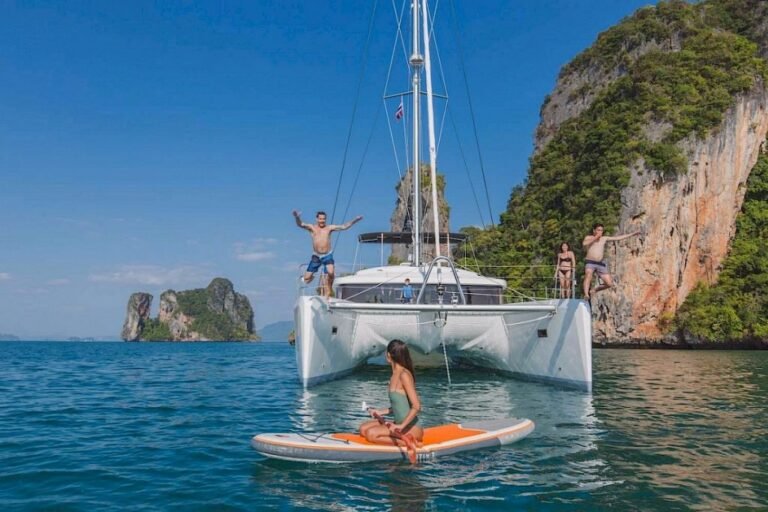
- Type: Gulet, motor yacht, catamaran, or sailing yacht — each offers a different experience (see our guide to yacht types for full details).
- Age and condition: A recently built or refitted yacht will have newer systems, fresher interiors, and more reliable air conditioning. Check the build/refit year.
- Crew: The crew makes or breaks a charter. Ask about the captain’s experience and the chef’s background. A good broker will have first-hand knowledge.
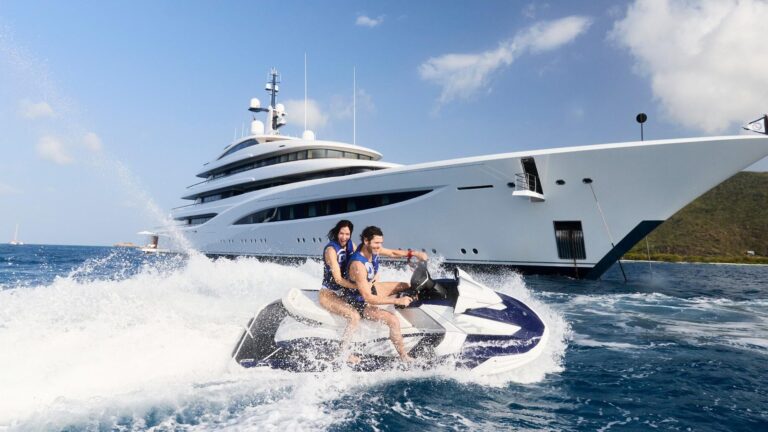
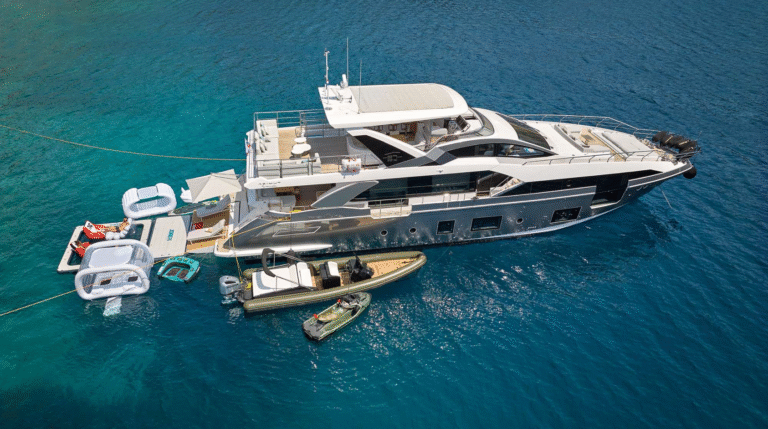
- Water toys: If you have active guests or children, check what water sports equipment is on board — paddleboards, jet skis, snorkelling gear, water slide.
Step 4: Understand the Full Costs
Charter pricing has several components, and first-time charterers are often surprised to discover that the headline rate is just the starting point. Here is a complete breakdown:
Base Charter Fee
The weekly rate for the yacht and crew. This is the headline figure in listings.
APA (Advance Provisioning Allowance)
Typically 30–40% of the base rate (the most common range is 30–35% for sailing yachts and gulets; 35–40% for motor yachts with higher fuel consumption). The APA is paid in advance and held on board to cover running expenses: fuel, food and beverages, port and marina fees, and crew gratuity. Any unspent APA is returned to you at the end of the charter.
| Example: A yacht at €50,000/week with a 35% APA means your total advance payment is €67,500. If only €15,000 of the APA is spent, you receive €2,500 back. |
Crew Gratuity
Gratuity for the crew is not included in the base charter fee or APA, though it is customarily settled from APA funds at the end of the charter. The standard is approximately 10% of the base charter fee, paid in cash directly to the captain, who distributes it among the crew. So on a €50,000/week charter, budget roughly €5,000 for gratuity. While it is discretionary, a good crew genuinely earns it — and tipping generously is remembered if you return to the same yacht.
VAT (Value Added Tax)
This is the cost that many first-time charterers overlook entirely — and it can add significantly to the total. VAT applies to yacht charters in most European waters and varies by country and charter type:
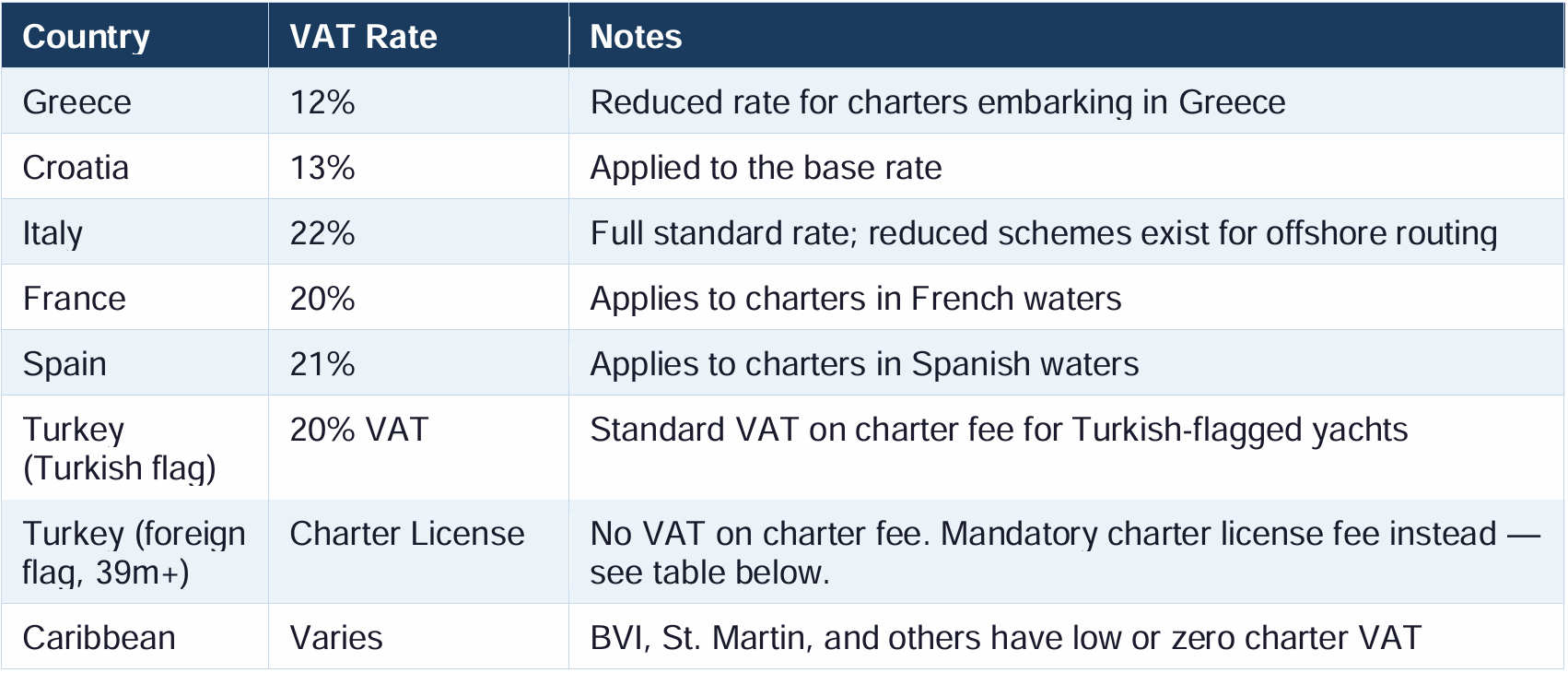
VAT is typically charged on top of the base charter fee, and in some cases on the APA as well. Your broker will advise on the applicable rate for your specific itinerary and the yacht’s flag state, as these interact to determine your exact liability.
Turkey: Charter License Fees (Foreign-Flagged Yachts 39m+)
For foreign-flagged yachts of 39 metres and above, Turkey does not charge VAT on the charter fee. Instead, a fixed Charter License fee is payable to the Ministry of Tourism. The license is mandatory — even for owner use — and must be obtained before guests enter Turkish waters. It is issued for either 10 days or 30 days. The period is fixed at the time of application and cannot be changed afterwards. Fees for 2026 (including application/administration fee):

| The process takes approximately 5 working days after submission of all required documents (translated into Turkish and notarised). No VAT or other taxes are charged on top of the license fee. |
| Practical tip: always ask your broker to provide a full cost breakdown inclusive of applicable VAT or charter license fees before committing to a booking. |
Step 5: Sign the Contract & Pay Deposit
Once you have selected your yacht, your broker will issue a MYBA (Mediterranean Yacht Brokers Association) or AYCA charter contract — the industry-standard legal document. A deposit of 50% is typically paid on signing, with the balance due 4–8 weeks before embarkation.
What to Pack for a Yacht Charter
- Soft luggage only: Hard suitcases do not fit in yacht cabins. Bring a soft bag or duffel.
- Non-marking soles: Most yachts require soft-soled, non-marking shoes on deck — or bare feet.
- Light layers: Evenings can be cooler, especially at anchor. Pack a light jacket.
- Sunscreen & hat: Reflected sun on water is intense. Use SPF50 and a wide-brimmed hat.
- Seasickness medication: If you are uncertain about your sea legs, bring medication as a precaution. Coastal cruising in Turkey is generally very calm.
First-time charterers consistently tell us the same thing after their trip: “Why didn’t we do this sooner?” Our brokers specialise in making the first charter experience seamless — and memorable for all the right reasons.